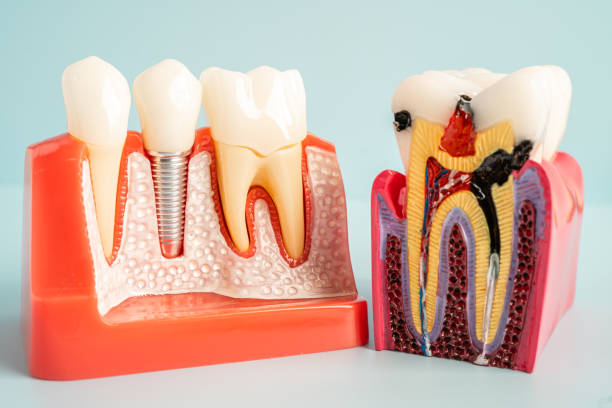
Choosing between saving a natural tooth and replacing it entirely is a big decision for any patient. When you visit a dentist in midtown Toronto, you will find that every mouth has unique needs that require a careful plan. A root canal tries to fix the tooth you already have by cleaning out the infection from the inside. On the other hand, an implant replaces the entire structure from the root to the crown. Understanding the goals of each treatment helps you feel more confident when discussing your oral health with a professional.
What Is the Main Difference Between a Dental Implant and a Root Canal?
The primary difference between dental implant and root canal procedures is whether the natural tooth remains in your mouth. During a root canal, the expert removes the damaged pulp but keeps the outer shell of your tooth intact. An implant involves removing the failing tooth completely and placing a titanium post into the jawbone. This metal post acts as a new foundation for a ceramic tooth that looks and feels like the original. While one process repairs what you have, the other starts fresh with a man-made replacement.
Which Option Keeps Your Natural Smile Intact?
Most experts prefer to save your original teeth whenever it is safely possible. A root canal allows you to keep your natural bite and the way your teeth fit together. However, if the tooth is cracked deep into the bone or is too weak to hold a filling, an implant becomes the safer choice. If you look for a dentist near you, they can take pictures of your jaw to see if the structure of the tooth is strong enough to survive a repair. Keeping your own teeth is usually the first goal of any oral health plan.
Which Lasts Longer: Root Canal or Dental Implant?
Both root canals and dental implants are made to last for many years. A root canal can stay strong for life when it’s covered with a good crown and cleaned properly. Dental implants use a titanium post that fuses with the bone, often staying in place forever. Some studies show implants have a slightly higher success rate over time, but a well-cared-for natural tooth is also very durable. Either option gives you a long-lasting way to eat and speak comfortably without pain.
How Does the Healing Time Compare for These Treatments?
- Root Canal: Most people feel back to normal within a few days after the procedure.
- Dental Implant: The jawbone needs several months to grow around the new post before the final tooth is attached.
- Crown Placement: Both options usually require a custom cap to be made in a lab for a perfect fit.
- Follow-up Visits: Implants often require more check-ins to monitor how the bone is healing over time.
Is One Choice More Comfortable Than the Other?
Modern technology ensures that neither process should cause sharp pain during the appointment. The area is completely numbed, so you only feel slight pressure while the dentist works on your smile. A root canal is often a faster way to get rid of a toothache because the infection is removed in just one or two visits. Implants take more patience but provide a very stable result once the healing is finished. The level of comfort during the actual work is very similar for both choices.
Dental Implant vs. Root Canal: Which Is Better for You?
The decision often depends on the current state of your jawbone and the amount of healthy enamel left. If you search for dental implants near you, they are the ideal choice for teeth that have already been repaired multiple times. If a tooth keeps getting cavities or breaking, replacing it with a titanium version stops the cycle of constant repairs. However, if the problem is just a simple infection in a strong tooth, a root canal is a much faster and less invasive way to stay healthy.
Does Cost Play a Role in This Decision?
Initially, a root canal is usually less expensive because it involves fewer parts and fewer visits. However, you must consider the long-term value of your investment in your health. Getting dental implants in midtown Toronto might cost more at the start, but because the material cannot get a cavity, you might save money on future repairs. A root canal requires a crown, and that crown might need to be replaced after ten or fifteen years. Weighing the upfront price against the future maintenance helps you see the true value of each path.
Why Should You Consult a Professional Early?
Waiting too long to fix a hurting tooth can take the choice out of your hands. If an infection eats away too much of the bone, a root canal might no longer be an option. Getting an exam at a dental clinicas soon as you feel a twinge ensures you have the most choices available. Early care means you can pick the treatment that fits your lifestyle and your budget. Protecting your smile today prevents more complex and expensive problems from developing next year.
Smile With Confidence at eviDental Smiles
Our team at eviDental Smiles explains every option clearly so you can choose what’s best for you. We use modern tools and gentle techniques to keep your visit calm, smooth, and effective.
Book your appointment today and take the first step toward a healthy, confident smile!
Frequently Asked Questions
Can a dental implant get a cavity like a normal tooth?
No, the materials used for implants are made of metal and ceramic, so they cannot decay. However, you still need to brush and floss around the implant to keep your gums healthy. If the gums get infected, the implant can become loose, so clean habits are still very important.
Will people be able to tell if I have a root canal or an implant?
Both treatments use a porcelain crown that is custom-made to match the colour of your surrounding teeth. Once the work is finished, it is almost impossible for anyone to notice a difference. Your smile will look natural and seamless regardless of which option you choose.
How do I know if my tooth is too damaged for a root canal?
A professional will use 3D imaging to look for cracks that go below the gum line. If a crack reaches the root, the tooth usually cannot be saved and must be replaced with an implant. If the damage is only in the top part of the tooth, a root canal is usually the primary recommendation.
Is it possible to get an implant immediately after a tooth is pulled?
In some cases, the titanium post can be placed on the same day the old tooth is removed. This depends on whether you have enough healthy bone to support the new structure. A professional will evaluate your jaw to see if you are a good candidate for this faster process.